Traditional Canting Batik: The Ultimate Guide to Indonesia’s Authentic Hand-Drawn Wax Art Heritage
Traditional canting batik is the most authentic form of Indonesian batik, created entirely by hand through a wax-resist process that demands patience, precision, and cultural awareness. It is not simply a textile, but a living heritage where every line carries intention and every motif holds meaning. To understand it is to step into a quiet dialogue between craftsmanship, philosophy, and identity.
Beyond its visual beauty, traditional canting batik teaches us something deeper. It invites us to slow down, to observe carefully, and to choose with awareness. In that stillness, we begin to see that batik is not something we merely wear—it is something we carry.
The Quiet Presence of Batik in Everyday Life
We often encounter batik in formal gatherings, ceremonies, and professional settings. It appears as a dress code, sometimes even as an obligation. Yet, despite how often we wear it, many of us remain distant from its meaning.
In offices, it becomes routine. At celebrations, it becomes decoration. However, without understanding, batik slowly turns into a surface—something seen, but not truly felt.
And in that distance, something subtle is lost. The connection between fabric and meaning begins to fade.
When Choosing Batik Becomes Habit, Not Awareness
Today, choosing batik is often driven by trends. Bold colors attract attention. Dense motifs feel impressive. Yet, not all visual appeal creates harmony.
Some patterns feel too crowded for formal settings. Others lack the calm presence required for meaningful moments. And often, choices are made quickly, without considering the appropriateness of the occasion.
True elegance, however, does not seek to stand out. It settles quietly into the space it enters. And batik, when chosen with awareness, reflects that quiet balance.
The Hands Behind Traditional Canting Batik
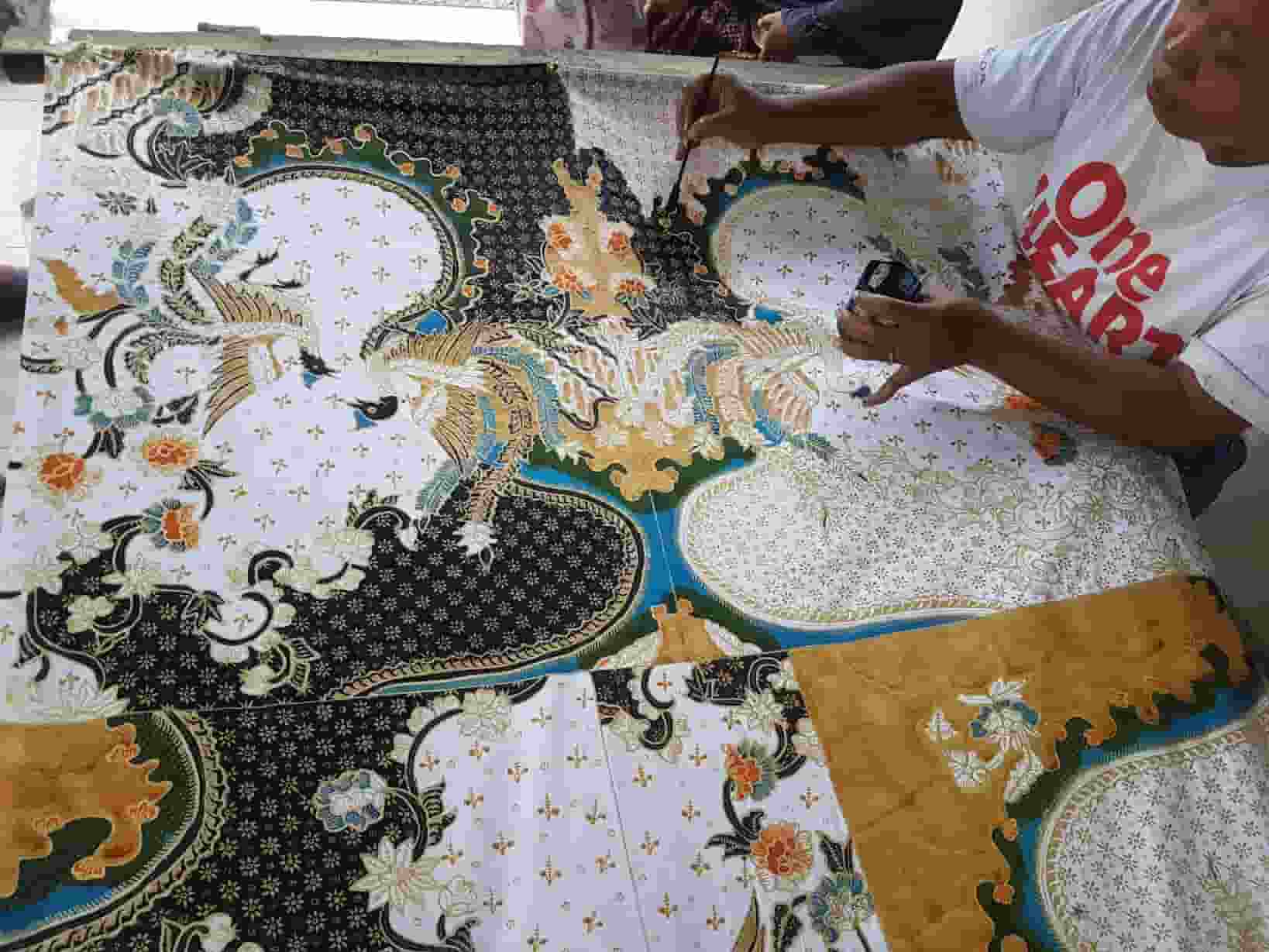
To understand traditional canting batik, we must return to its origin—the human hand. Each cloth begins as an empty surface, but slowly, it becomes a space filled with intention.
Using a canting tool, hot wax flows gently, following the movement of the artisan. There is no rush in this process. Each line requires focus. Each dot requires patience.
The fabric begins to remember. It holds the rhythm of the hand, the stillness of the moment, and the quiet discipline of the maker.
This deeper journey of meaning and craftsmanship can be explored further through
authentic hand-drawn batik tulis as a journey of patience and cultural depth
, where the soul of the process becomes more visible.
Motifs That Speak Without Words
In traditional canting batik, motifs are not decoration. They are expressions of thought. Parang reflects strength and continuity. Kawung carries balance and restraint. Sido Mukti whispers hopes for a life of harmony and fulfillment.
These motifs do not demand attention. Instead, they speak softly. And when worn, they extend their meaning into the presence of the wearer.
The fabric becomes a quiet voice—one that communicates without needing words.
Batik as a Language of Attitude
What we wear reflects how we understand the world. In this sense, batik becomes a language of attitude. It shows whether we choose with awareness or simply follow habit.
A calm motif for a formal moment. A balanced composition for respectful visits. A meaningful pattern for ceremonial occasions. Each decision reveals sensitivity.
And through that sensitivity, batik becomes more than appearance. It becomes presence.
Understanding the Depth of the Wax-Resist Process
The wax-resist process forms the essence of traditional canting batik. Wax protects certain areas of the cloth, allowing colors to develop gradually through repeated dyeing.
This is not a single-step process. It unfolds slowly. Layers of color emerge through time, creating depth that cannot be rushed.
To understand how this layered technique builds both durability and artistic richness, one may explore
the full wax-resist batik technique and how it shapes durability and artistry
, where the process is seen more closely.
And when traced further back, the roots of this technique continue through history in
the ancient wax-resist method that has shaped batik for centuries
, revealing how tradition continues to live within modern creations.
The Difference Between Batik Tulis, Cap, and Printing
Not all batik carries the same depth. Batik tulis is created by hand, slowly and carefully. Batik cap uses stamped patterns, allowing repetition. Meanwhile, printed batik only imitates the visual form without the wax process.
At first glance, they may appear similar. Yet, when observed closely, batik tulis reveals subtle irregularities that feel alive. Batik cap appears more structured. Printed batik feels flat and immediate.
The difference is not only technical. It is a difference in presence.
Recognizing Authenticity with Quiet Awareness
Authentic batik tulis does not need to announce itself. It reveals its character gently. The pattern appears on both sides of the cloth. The colors feel layered. The lines carry the warmth of human touch.
These details require attention. And in that attention, recognition begins to grow.
We begin to see not only the fabric, but the process behind it.
Choosing Batik as an Expression of Appropriateness
There is a quiet principle within traditional culture—appropriateness. It is not about rules, but about sensitivity. Knowing what belongs to a moment, and what does not.
Traditional canting batik supports this awareness. Its calmness allows the wearer to enter a space without disturbing it. Its balance allows harmony to be maintained.
And through this, batik becomes alignment between self and surroundings.
The Presence of Craft in Every Thread
Some fabrics are made quickly. Others are grown slowly. Traditional canting batik belongs to time.
Through three stages of dyeing and three stages of hand canting, each piece develops gradually. The colors do not simply appear—they mature. The motifs do not simply exist—they evolve.
Using materials such as primissima cotton, gamelan cotton, and kereta kencana cotton, the fabric achieves a quiet balance between softness and durability.
Available at Batikdlidir: thousands of authentic hand-drawn batik collections, each one shaped through this careful process. With a size of 240 x 110 cm and a price range of IDR 1–2 million, each piece reflects not just material value, but time, patience, and craftsmanship.
From Appreciation to Ownership
Understanding batik often begins with admiration. We notice the beauty. We feel the calmness. Yet slowly, appreciation becomes something deeper.
It becomes connection. And from connection, a quiet desire emerges—to carry something meaningful.
Ownership, in this sense, is not about possession. It is about continuing a story with awareness.
A Gentle Step Forward
If this journey feels close, there is no need to rush. Understanding grows naturally. Sometimes, it begins with a simple conversation.
For those who wish to explore further, you may reach out through WhatsApp at 0822 6565 2222 (Pak Muzakir). Not as a transaction, but as a continuation of understanding.
Because often, the right piece of batik does not need to be searched. It arrives when we are ready to recognize it.
Frequently Asked Questions
What is traditional canting batik?
Traditional canting batik is a hand-drawn batik created using a wax-resist technique with a canting tool, resulting in unique and highly detailed patterns.
How can we identify authentic batik tulis?
Authentic batik tulis shows patterns on both sides, layered colors, and slight irregularities that reflect hand craftsmanship.
How long does the process take?
The process can take weeks to months depending on the complexity, as it involves multiple stages of waxing and dyeing.
What materials are commonly used?
High-quality batik uses materials such as primissima cotton, gamelan cotton, and kereta kencana cotton for comfort and durability.
Why is batik tulis more valuable?
Its value comes from the time, skill, and cultural meaning embedded in each piece, making every cloth unique.
When should traditional batik be worn?
It is most appropriate for formal events, cultural ceremonies, and respectful gatherings.
Is batik tulis suitable for daily wear?
Yes, as long as the motif and tone are chosen appropriately for the setting.
A Closing Reflection
Traditional canting batik reminds us that beauty does not rush. It grows quietly, shaped by patience and care.
May we learn to choose with awareness, to wear with respect, and to live with balance. And may our days be filled with calmness, our steps guided with clarity, and our lives blessed with health and peaceful sustenance.